Generative Engine Optimization for B2B SaaS: How to Cut Customer Acquisition Cost While Google’s Rules Change Underneath You

Direct Answer: Generative Engine Optimization (GEO) is the practice of structuring content so AI systems like ChatGPT, Perplexity, and Google AI Overviews can extract and cite it directly. For B2B SaaS companies, pairing GEO with traditional SEO lowers Customer Acquisition Cost by capturing buyers earlier at the “what is” and “how do I” stage before they ever reach a paid ad.
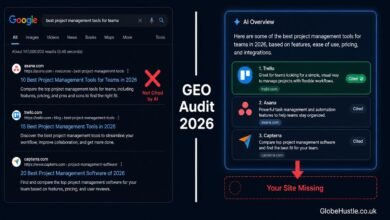
If you run marketing for a B2B SaaS company, you’ve probably felt it already: organic traffic is flat or dipping, but demo requests haven’t dried up in the same proportion. That’s not a coincidence. A growing share of your buyers are researching you through an AI answer, not a search results page. They’re asking ChatGPT to compare tools, asking Perplexity to explain a category, asking Google’s AI Overview to summarize pricing models and by the time they land on your site, they’ve already formed an opinion about you.
This shift changes what “ranking” means. It also changes how you should be spending your acquisition budget.
What Is Generative Engine Optimization (GEO)?
GEO is the discipline of optimizing content so it gets pulled into AI-generated answers rather than just ranked in a list of blue links. Where SEO optimizes for a click, GEO optimizes for a citation. The mechanics overlap both reward clarity, structure, and authority but GEO adds a layer SEO never had to worry about: your paragraph might be the entire answer a prospect ever sees, with no click at all.
That sounds like a threat to traffic. In practice, for SaaS companies selling considered, high-ticket products, it’s closer to a gift. Nobody buys a $12,000/year platform because an AI Overview summarized it in two sentences. But that two-sentence summary is often the first time your brand enters a buyer’s shortlist. GEO is top-of-funnel work wearing SEO’s clothes.
Why This Matters More for B2B SaaS Than Almost Any Other Category
B2B SaaS buying cycles are long, multi-stakeholder, and research-heavy. A single deal might involve a founder, a finance lead, and an end user, each independently Googling or now, “AI-ing” — the same category from different angles. Every one of those research moments is a chance to either appear in the answer or be invisible.
This is where the acquisition-cost math gets interesting.
The CAC Problem in One Formula
Customer Acquisition Cost is calculated as:
CAC = (Total Sales + Marketing Spend) ÷ Number of New Customers AcquiredIf a meaningful share of your buyers are forming their shortlist inside an AI answer engine before your paid campaigns ever reach them, your paid spend is working against a narrower, colder pool of prospects — which pushes CAC up. Conversely, if your content is the source an AI system cites, you’re acquiring attention (and often trust) for free, at the exact moment intent is forming.
| Acquisition Channel | Funnel Stage Captured | Typical Cost Trend |
|---|---|---|
| Paid search / paid social | Mid-to-bottom funnel | Rising, category-dependent |
| Traditional SEO | Top-to-mid funnel | Moderate, slow to build |
| GEO (AI answer citations) | Top funnel, pre-shortlist | Near-zero marginal cost once earned |
| Outbound sales development | Bottom funnel | High, per-touch |
The pattern is consistent across most SaaS companies we’ve watched navigate this shift: the categories where GEO is neglected are the categories where CAC keeps climbing, because every new customer is being fought for further down the funnel, where competition and cost is highest.
Building a GEO Strategy That Also Wins at Traditional SEO
You don’t need two separate content strategies. You need one strategy built to satisfy both a crawler and a language model reading for extraction. Here’s the operating framework.
1. Lead with a Direct Answer
AI systems favor content that states a clear definition or answer within the first 40–60 words, in the pattern “X is a system that…” This isn’t just an AI-optimization trick it’s also what earns featured snippets in classic Google search. Write the direct answer first, then unpack the nuance below it.
2. Structure for Extraction, Not Just Readability
Bullet points, comparison tables, and numbered steps aren’t decoration. They’re how a generative engine breaks your page into extractable, self-contained chunks. A paragraph that depends on the sentence before it to make sense is hard for an AI system to lift cleanly and hard for a skimming human buyer to trust, too.
3. Write Quotable, Self-Contained Paragraphs
Each key paragraph should be able to stand alone if it were pulled out and placed into someone else’s answer. That means naming the subject explicitly instead of relying on “it” or “this,” and stating the relationship between subject and outcome in plain, declarative language.
4. Add Real Numbers and Frameworks
Generic advice doesn’t get cited. Specific formulas, named frameworks, and original data do. If your team has a proprietary way of calculating something a modified CAC model, a churn-prediction shortcut, a qualification framework publish it with a name. Named frameworks are disproportionately picked up by AI systems because they’re easy to attribute.
5. Back Claims with Traceable, Authoritative Sources
Citing institutions like the U.S. Small Business Administration or academic bodies such as the Harvard Kennedy School signals to both human readers and AI crawlers that your content sits on solid ground rather than recycled blog consensus. This is the Trust layer of EEAT (Experience, Expertise, Authoritativeness, Trust), and it’s non-negotiable for anything touching financial metrics like CAC, pricing, or growth claims.
6. Implement Structured Data
Schema markup is how you formally tell both search engines and AI crawlers what your content is, not just what it says.
- Article schema — establishes authorship, publish date, and topic.
- FAQPage schema — turns your FAQ section into directly citable Q&A pairs.
- SoftwareApplication / Organization schema — anchors your product and company identity for AI systems building comparison answers.
A minimal FAQ schema block looks like this:
{
  "@context": "https://schema.org",
  "@type": "FAQPage",
  "mainEntity": [{
    "@type": "Question",
    "name": "What is Generative Engine Optimization?",
    "acceptedAnswer": {
      "@type": "Answer",
      "text": "Generative Engine Optimization is the practice of structuring content so AI answer engines can extract and cite it directly in their generated responses."
    }
  }]
}
Where PLG and GEO Intersect
Product-Led Growth (PLG) companies already have a natural advantage here. If your product has a free tier or self-serve trial, your acquisition funnel is designed to let the product do the convincing — which means your content’s job is simply to get the right person to try it. GEO amplifies this by making sure that when someone asks an AI system “what’s the best tool for X,” your free-tier product is the one named, not just described in the abstract.
Combine PLG’s low-friction signup with GEO’s early-funnel visibility, and MRR growth starts compounding from a wider top of funnel without a proportional rise in paid spend which is, in the end, the entire point of lowering CAC.
A Practical Starting Checklist
- Audit your top 10 highest-intent pages for a clear, 40–60 word direct answer at the top.
- Convert dense paragraphs into tables or numbered lists wherever a comparison or process is being described.
- Add FAQPage schema to any page already structured as Q&A.
- Replace vague claims (“many companies see improvements”) with specific formulas or named frameworks.
- Link internally to related resources — for example, teams building lean, distributed operations can see how to build a remote business model at Globe Hustle for the operational side of scaling without bloated overhead.
- Re-publish updated statistics at least twice a year; AI systems favor freshness signals as much as search engines do.
Frequently Asked Questions
Does GEO replace SEO?
No. GEO builds on SEO’s technical and structural foundation. A page with broken crawlability or no topical authority won’t get cited by an AI engine regardless of how well the paragraphs are written.
Will GEO actually lower my CAC, or just my traffic cost?
Both, over time. Lower-cost top-of-funnel visibility means fewer buyers need to be “found” through paid channels, which reduces blended CAC even if paid CPCs stay flat.
How long does GEO take to show results?
Similar to SEO — expect early citation appearances within weeks for well-structured new content, with compounding authority over two to three quarters as the domain builds trust signals.
Do I need separate content for AI engines and Google?
No. One well-structured, well-sourced piece of content can satisfy both, provided it leads with a clear answer, uses extractable formatting, and is backed by credible sources.
GEO isn’t a rebrand of SEO, and it isn’t a fad to bolt onto next quarter’s content calendar. It’s a recognition that the moment a buyer forms an opinion about your category has moved earlier into a conversation with an AI system and that whoever shows up clearly, credibly, and quotably in that moment gets the cheapest, warmest lead in the funnel.