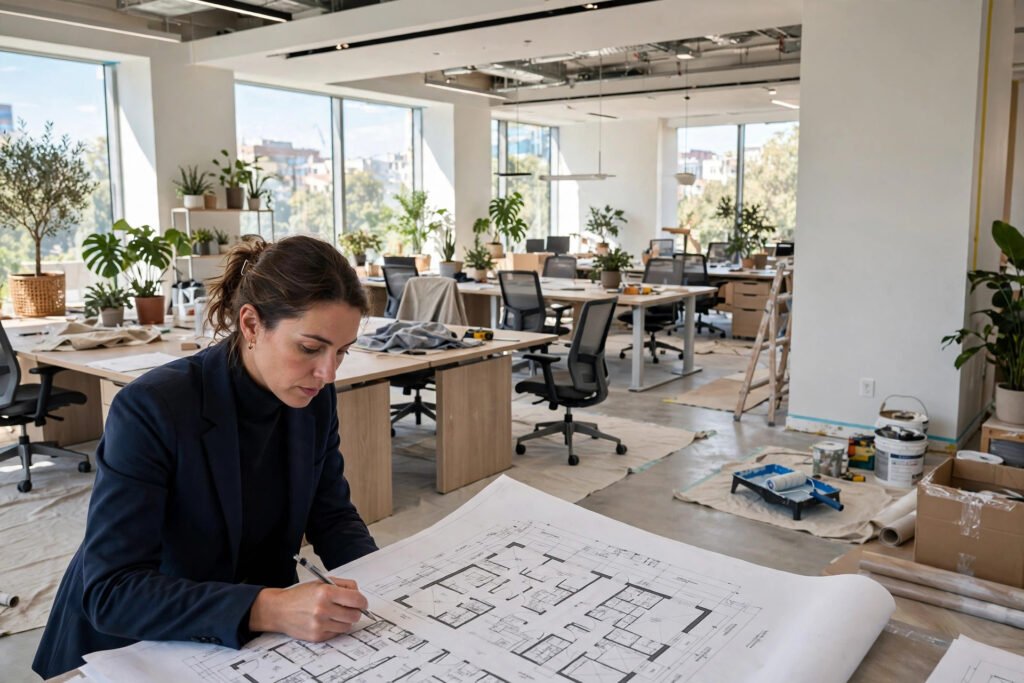
An office that worked perfectly five years ago might no longer be suitable for the business occupying it today. Teams grow, technology changes and employees develop different expectations about where and how they work. Yet many companies continue operating from offices designed around requirements that are no longer relevant.
Traditionally, businesses might have waited a decade or longer before considering a major workplace refurbishment or relocation. Today, reviewing an office every five years can be a sensible way to identify whether the space still supports the people using it.
That doesn’t mean replacing furniture or undertaking a complete refurbishment every five years. Sometimes relatively small changes can make a significant difference.
Here are some of the main reasons businesses should regularly reassess their working environment.
1. Your Office Needs to Reflect How People Work Today
The way employees use office space has changed considerably. Hybrid working, video conferencing and the increasing importance of collaborative spaces mean that traditional desk-heavy layouts aren’t always the most practical option.
An office originally designed to accommodate everyone at individual workstations might now have large areas sitting empty on certain days, while meeting rooms remain constantly occupied.
This is where reviewing the layout becomes particularly valuable.
Businesses may benefit from introducing:
Flexible workstations that accommodate changing attendance patterns.
Smaller meeting rooms for video calls and private discussions.
Quiet working areas away from busy communal spaces.
Informal collaboration zones for team projects.
Breakout spaces that give employees somewhere comfortable to take a break.
The goal isn’t necessarily to create a fashionable office. It’s to ensure the space reflects how the organisation actually operates.
2. A Better Working Environment Can Support Productivity
An attractive workplace is one thing. An office that makes everyday tasks easier is another.
Poor lighting, uncomfortable temperatures, excessive noise and badly positioned workstations can all make the working day more frustrating than it needs to be.
Employees who regularly struggle to concentrate because of nearby conversations may benefit from improved acoustic treatments or dedicated quiet spaces. Likewise, reorganising workstations to take better advantage of natural light can make an office feel considerably more comfortable.
Ventilation is another important consideration. The Health and Safety Executive highlights the importance of adequate fresh air in enclosed workplaces, with good ventilation associated with improved concentration and workplace satisfaction.
Of course, productivity isn’t determined by office design alone. Management, workload and company culture all play important roles.
However, removing unnecessary distractions and providing suitable facilities can help employees work more comfortably and effectively.
3. Your Workplace Should Grow With Your Business
A business employing 15 people today could look very different five years from now.
Additional employees may require more workstations, larger meeting facilities or separate departmental areas. New services might introduce the need for specialist equipment, while organisational changes could alter how teams interact.
The problem is that many businesses only reconsider their office layout once the space becomes noticeably overcrowded.
By reviewing workplace requirements regularly, organisations can identify potential problems before they begin affecting everyday operations.
A growing team doesn’t always need a larger building. Reconfiguring existing space, replacing oversized furniture or introducing more efficient storage can sometimes create additional capacity.
Commercial interiors specialists such as Stirling Interiors help businesses assess their existing workplaces and explore improvements through office design, space planning, fit outs and refurbishments.
The right approach depends on the building, available budget and the organisation’s future requirements. In some circumstances, refurbishing the existing premises will make more financial sense than relocating.
4. First Impressions Matter to Clients and Visitors
Your office communicates something about your business before anyone has even started a conversation.
A welcoming reception, comfortable meeting facilities and well-maintained interiors can help visitors feel confident about the organisation they are dealing with.
On the other hand, worn carpets, damaged furniture, poor lighting and outdated communal spaces may create an impression that the workplace has received little attention.
This doesn’t mean every business needs an expensive reception area or luxury finishes.
A professional environment can be achieved through relatively straightforward improvements, such as updating furniture, improving lighting, refreshing decorations and making shared spaces more practical.
It’s also worth considering how your business identity has evolved.
If your company has undergone significant changes to its branding, services or positioning, an office designed several years earlier might no longer reflect the organisation you are today.
5. Employees Need Spaces That Support Different Activities
Not everyone works best in the same environment.
Some employees prefer open, collaborative areas where they can communicate easily with colleagues. Others need privacy to handle confidential information or concentrate on detailed tasks.
A workplace that offers only one type of environment can make it difficult to accommodate these differences.
For example, an open-plan office might work well for a creative team discussing ideas throughout the day. However, employees who regularly conduct sensitive telephone calls may struggle without access to enclosed rooms.
Introducing glazed office partitions, acoustic screens or smaller meeting rooms can help create a better balance.
Furniture also plays an important role. Adjustable seating, practical desk arrangements and suitable storage can improve comfort without requiring major building work.
Rather than assuming every employee needs an identical workstation, businesses should consider the different activities taking place throughout the working day.
6. An Office Review Can Identify Opportunities to Reduce Costs
Refurbishing an office involves expenditure, but continuing to operate from an inefficient workplace can also be costly.
Outdated lighting, ageing heating and cooling systems, poorly organised floor space and furniture that frequently requires replacement can create ongoing expenses.
A workplace review offers an opportunity to assess where improvements might provide better long-term value.
For example, replacing inefficient lighting with suitable LED systems may reduce electricity consumption. Reusing existing furniture or partitions can help control refurbishment costs, while improved space planning could reduce the need for additional premises.
Not every improvement needs to happen immediately.
Businesses can prioritise essential changes and develop a phased refurbishment plan, spreading expenditure over time rather than attempting to replace everything at once.
This also allows companies to retain materials and equipment that remain in good condition.
7. Regular Updates Can Help Keep Employees Engaged
An office environment can influence how employees feel about coming to work.
A workplace that appears neglected, feels uncomfortable or lacks suitable facilities may contribute to frustration, particularly when employees experience the same issues every day.
Listening to staff is therefore an important part of reviewing office space.
Rather than making design decisions based entirely on management preferences, businesses can ask employees which areas work well and what they would change.
Common requests might include more meeting rooms, quieter working areas, improved kitchen facilities or more comfortable furniture.
Addressing these concerns demonstrates that the organisation is paying attention to employees’ working conditions.
It also helps ensure money is spent on improvements people genuinely need, rather than features that simply look impressive in photographs.
8. You Don’t Always Need a Complete Office Refurbishment
One of the biggest misconceptions about updating an office is that it requires a complete redesign.
In reality, workplace improvements can vary enormously in scale.
A business might only need to repaint its reception, replace worn flooring or introduce a few additional meeting spaces. Another organisation may discover that the entire layout is unsuitable and decide to undertake a substantial refurbishment.
For companies moving into new premises, a complete office fit out may be necessary to create the required working environment.
The important thing is identifying what needs to change before deciding how much to spend.
A practical five-year review could involve:
Assessing the existing layout: Identify underused areas, overcrowded spaces and potential improvements.
Gathering employee feedback: Understand which aspects of the workplace support productivity and which create frustration.
Reviewing building services: Consider the condition of lighting, ventilation, heating and other essential systems.
Evaluating future requirements: Account for expected business growth, new technology and changing working arrangements.
Prioritising improvements: Separate essential upgrades from desirable changes and establish a realistic budget.
These assessments can provide a clearer picture of whether minor alterations, a partial refurbishment or a larger project would be most appropriate.
Is Five Years the Right Time to Update Your Office?
Five years is a useful point at which to conduct a thorough workplace review, but it shouldn’t be treated as a fixed refurbishment deadline.
A well-designed office with durable furniture, flexible layouts and properly maintained facilities may continue performing effectively for considerably longer.
Equally, a rapidly growing business might need to reconsider its workspace after just two or three years.
The condition of the building, changes in employee numbers and the way the organisation operates should determine when improvements are necessary.
Ultimately, the question isn’t how old your office is. It’s whether the space still supports your business.
Regularly reviewing your working environment allows you to make informed decisions, plan improvements before problems become serious and create a workplace that continues to meet the needs of employees and customers.
A successful office doesn’t need to look different every five years. It needs to keep working for the business inside it.