Quick Summary
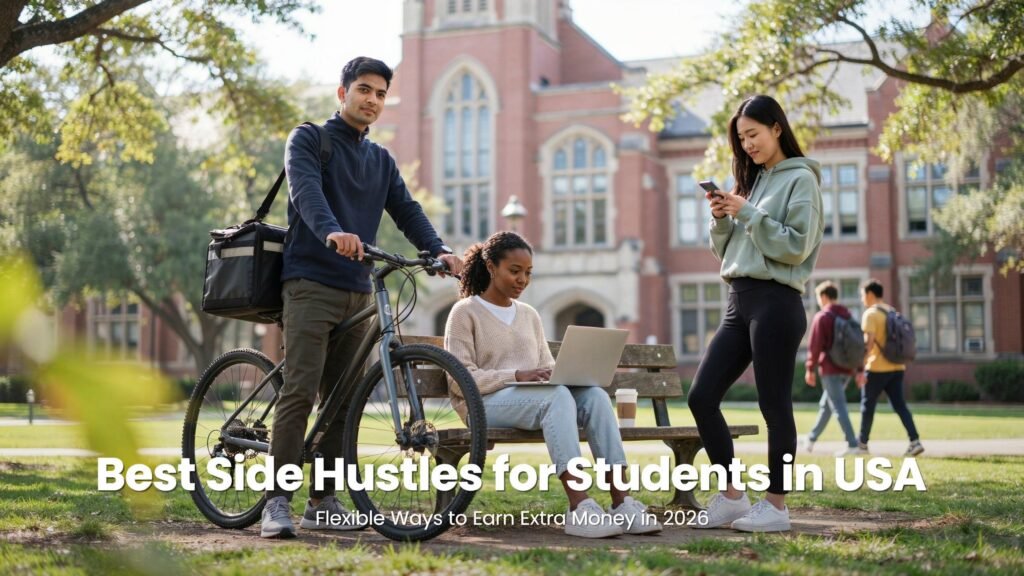
The best side hustles for students in USA right now are online tutoring, food delivery on bike or foot, freelance writing or simple design work, pet sitting, flipping thrift finds, and selling digital study guides. Most need almost no cash to start, work around lectures, and can bring in $300 to $1,000 a month once you get moving. Pick something that matches a skill you already have.
Highlight
- Choose flexible gigs that protect your study time first.
- Tutoring and freelancing usually pay the highest hourly rates.
- Delivery and pet apps give same-day cash with almost zero experience.
- Digital products can keep earning after the initial work.
- International students need to double-check visa rules before taking paid work.
- Set a clear monthly target so the hustle stays helpful instead of stressful.
- Two light side hustles often beat one heavy one for steady income.
Featured Snippet Table
| Side Hustle | Avg. Hourly / Monthly | Startup Cost | Car Needed? | Best For |
|---|---|---|---|---|
| Online Tutoring | $20–$50/hr | $0 | No | Strong in a subject |
| Food Delivery (bike/walk) | $15–$25/hr | $0–$50 | No | Campus or city students |
| Freelance Writing/Design | $15–$40/hr | $0 | No | Creative or writing skills |
| Pet Sitting / Dog Walking | $15–$30/visit | $0 | No | Animal lovers |
| Reselling (clothes/shoes) | $200–$800/mo | $50–$200 | No | Style sense + thrift skill |
| Digital Products (Etsy) | $100–$1,000+/mo | $0–$20 | No | Design or study tips |
Best side hustles for students in USA are the ones that leave room for classes, don’t empty your wallet to start, and still put cash in your account. A side hustle is simply any paid work you do outside your studies or regular campus job. Students use them to cover textbooks, rent, late-night pizza, or to keep student loans from climbing faster than they should.
You don’t need a car. don’t need a new laptop. You don’t even need fancy experience. Plenty of these options work from a dorm desk or the library. The real skill is matching the hustle to the free hours you actually have and the things you’re already decent at.
Why Students Actually Need Extra Cash
Tuition, housing, and food keep going up. Scholarships and campus jobs help, yet a lot of students still come up short. A good side hustle fills the gap without forcing anyone to drop a class. It also teaches practical stuff—talking to clients, managing time, basic self-promotion—that looks solid on a résumé later.
Some people treat the money as fun spending cash. Others throw every dollar at loans. Both work fine. What matters is picking something you can keep doing for a whole semester without burning out.
Online and Remote Options That Fit Student Life
Online tutoring sits near the top for a reason. You teach subjects you already know—math, chemistry, Spanish, test prep and platforms pay $20 to $50 an hour. Sessions usually run 30 to 60 minutes, so they slide between lectures easily. If you did well on the SAT, ACT, or a tough college course, parents already see you as qualified.
Freelance work on Fiverr or Upwork is another solid route. Short blog posts, simple Instagram graphics, or basic data entry often start at $15–$25 a task and climb once reviews appear. Students who already write clean papers or play with design tools pick this up fastest.
Digital products take more effort at first but can keep selling later. Study guides, printable planners, or template packs on Etsy are common. After the files go up, sales can continue with almost no extra work. Some student sellers hit $250–$1,000 months once a few products start moving.
Surveys and microtasks pay the least usually under $5 an hour but they need zero skill and fill those random 20-minute gaps between classes. Treat them as coffee money, not a main plan.
When freelancers start pitching higher-paying clients, clean proposals help. Tools that package those pitches well make a difference. You can check options in this guide on the best proposal software for freelancers.
Local Gigs That Still Work Around Campus
Food delivery stays one of the most flexible physical options. DoorDash, Uber Eats, and Grubhub let you work by bike or on foot in many college towns. Dinner rush often lines up with the end of afternoon classes. Earnings usually fall between $15 and $25 an hour including tips, depending on the city and the weather.
Pet sitting and dog walking fit students who like animals. Apps connect you with owners who need midday walks or overnight care. Rates run $15–$30 per visit or overnight. Plenty of these gigs stay within walking distance of campus.
Reselling thrifted clothes, sneakers, or textbooks works if you notice trends. Buy low at campus sales or Goodwill, clean things up, and list them on Facebook Marketplace, eBay, or Depop. Consistent sellers often clear a few hundred dollars a month without leaving campus.
Campus brand-ambassador roles or event staffing sometimes appear through career centers. These pay by the hour or by the shift and usually involve handing out samples or helping at games and career fairs.
International students looking for higher-paying legal options can compare ideas that fit visa rules in this related piece on highest paying part-time jobs UK international students. Many of the same principles apply to F-1 restrictions in the United States.
Realistic Money Numbers
A realistic first-month target for most students sits around $300–$600. Once ratings or a small client base build, $800–$1,200 becomes reachable with 10–15 focused hours a week. Tutoring and skilled freelancing sit at the higher end. Delivery and pet care land in the middle. Surveys stay at the bottom.
Location changes the picture. Dense college towns with restaurants and pet owners create more delivery and sitting work. Smaller campuses often push people toward online options.
Taxes still apply. Keep simple records of what you earn and what you spend. The IRS treats most of this as self-employment income once you cross certain thresholds. The official IRS self-employment tax page has the current details so you don’t get surprised later.
Start This Weekend Without Overthinking
Pick one hustle that matches a skill or free-time gap you already have. Create the free account on the main platform tutoring site, delivery app, Fiverr, Rover, whatever fits. Finish any background check or short training. Set a realistic weekly limit, maybe 8–10 hours so classes stay first. Then just do the first three jobs or listings even if they feel awkward. Momentum beats perfect planning every time.
One student I talked to started with just two hours a week tutoring organic chemistry. Those two hours covered her entire grocery budget for the semester and she never felt the need to scale up.
Mistakes That Quietly Kill Progress
Trying three platforms at once usually means none of them get enough attention. Overpromising availability and then canceling when exams hit damages ratings fast. Ignoring taxes or mixing personal and hustle money creates headaches later. Treating every free evening as work time burns people out by midterms.
A side hustle should lower money stress, not create new academic stress. Balance is the real win.
Infographic Concept
Second Table – 30-Day Starter Roadmap
| Week | Focus Action | Expected Outcome |
|---|---|---|
| 1 | Choose hustle + create accounts | Profiles live, first job possible |
| 2 | Complete 5–8 gigs or list 5 products | Early reviews or first sales |
| 3 | Raise rates slightly or add second listing | Higher hourly or more volume |
| 4 | Track total earnings + adjust hours | Clear monthly baseline set |
FAQ
How much can a student realistically make with a side hustle?
Most students who stick with one solid option for a full month clear $300–$800. Tutoring and skilled freelancing can push past $1,000 with consistent hours. Delivery and pet care usually land in the middle range.
Do I need a car for the best side hustles for students in USA?
No. Online tutoring, freelancing, digital products, bike delivery, and most pet-sitting gigs work without a car. Focus on campus-dense areas or fully remote platforms.
Are these side hustles legal for international students?
It depends on the visa. F-1 students generally need authorization for off-campus paid work. Check the international student office and stick to campus or CPT-approved options until clear permission exists.
What is the easiest side hustle to start this week?
Food delivery apps or pet-sitting platforms usually let you begin within a few days after a quick background check. Surveys need almost no wait but pay the least.
Can I do a side hustle while working a campus job?
Yes. Plenty of students combine a few campus hours with one flexible side hustle. Just protect study time and ease off during peak exam weeks.
How do I avoid burnout?
Cap weekly hustle hours at 10–12 during regular semesters and drop lower near finals. Treat the income as a tool, not the main focus of life.
Author Bio
Alex Rivera spent four years balancing full-time engineering classes with tutoring and freelance design work that covered rent and groceries. After graduating, Alex has helped dozens of current students build realistic side-income plans that actually protect GPAs. The focus stays practical—what works on real campuses in 2026, not overnight success stories.