
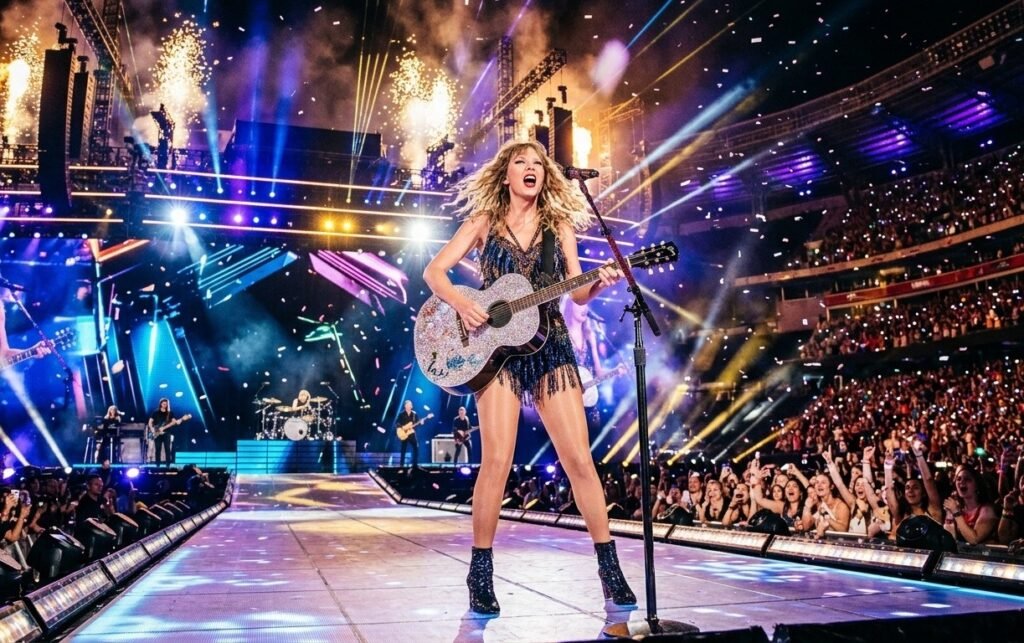
Taylor Swift is no longer just a name atop the music charts; she is a global economic powerhouse. When we discuss “The Swift Economy,” we aren’t just talking about record-breaking album sales. We are analyzing a sophisticated multi-layered business machine that spans from the Taylor Swift perfume empire to high-stakes licensing and a retail strategy that rivals Fortune 500 giants.
In this deep dive, we will explore how Taylor Swift built her billion-dollar brand, why her ring details trigger global search trends, and the strategic lessons every entrepreneur can learn from her “Mastermind” branding.
The Psychology of the “Swiftie” Sales Funnel
Taylor Swift’s business model is a masterclass in D2C (Direct-to-Consumer) engagement. Unlike traditional corporations that spend millions on cold advertising, Taylor focuses on community building. Her products—whether a $10 keychain or a $300 limited-edition vinyl—have a guaranteed 100% sell-out rate.
The Entrepreneurial Lesson: Build the community first, and the sales will follow.
🚀 Globe Hustle Insight: In the modern economy, a loyal audience is your greatest asset. Learn how to scale your reach with our guide on Digital Brand Loyalty.
The Fragrance Era: A Case Study in Brand Licensing
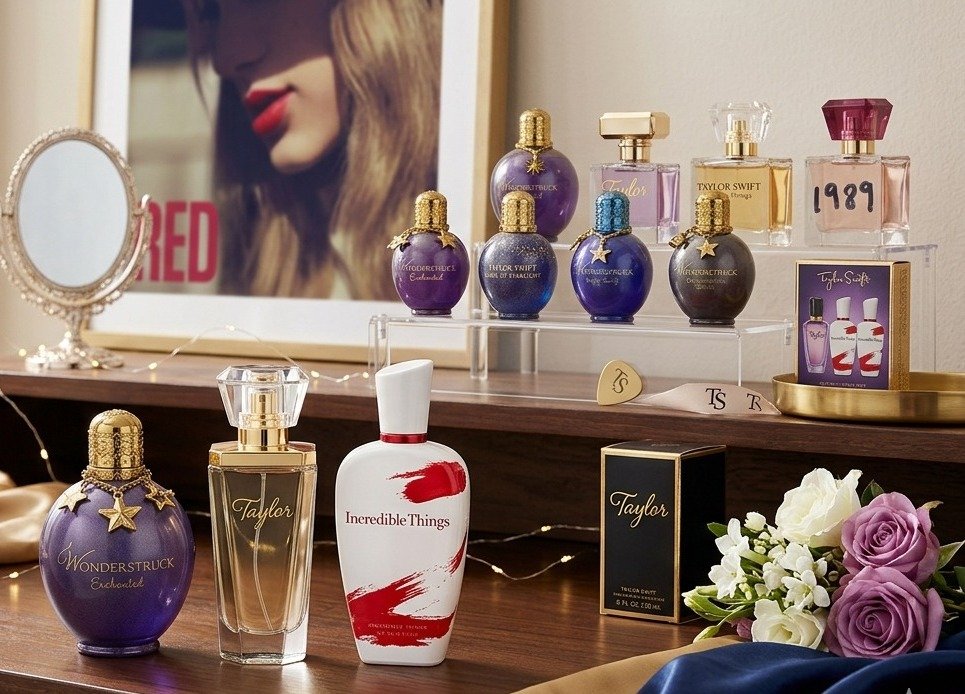
The Taylor Swift perfume collection remains a golden chapter in the history of celebrity fragrances. Her partnership with Elizabeth Arden proved that licensing is the ultimate tool for generating massive passive income while maintaining brand prestige.
- Wonderstruck (2011): This launch shattered records, earning $18 million in its first few weeks. Forbes notes that her endorsement power is a foundational pillar of her net worth.
- The Business Logic: Through licensing, Taylor earned massive royalties without the operational risks of manufacturing and logistics. Today, these “vaulted” perfumes are so rare that bottles fetch up to $350 on the secondary market.
Jewelry, Symbolism, and the “Easter Egg” Economy
A major trending topic for fans and investors alike is the Taylor Swift ring details. Taylor uses jewelry as more than just an accessory; it is a tool for “narrative marketing.
| Product / Item | Marketing Strategy | Economic Impact |
|---|---|---|
| The ‘Red’ TV Ring | Merchandising the Re-records | Created a “badge of honor” for fans supporting her rights. |
| Snake Rings | Reputation Branding | Flipped a negative PR narrative into a multi-million dollar merch line. |
| Custom Engagement Ring | Personal Branding | Forbes estimates her custom jewelry choices influence millions in boutique sales |
The “Swift Lift”: Taylor often chooses pieces from independent designers. When fans decode her “ring details,” those small businesses often experience a 500% spike in traffic overnight—a phenomenon known as the “Swift Lift.”
The Eras Tour: A $5 Billion Operations Masterclass
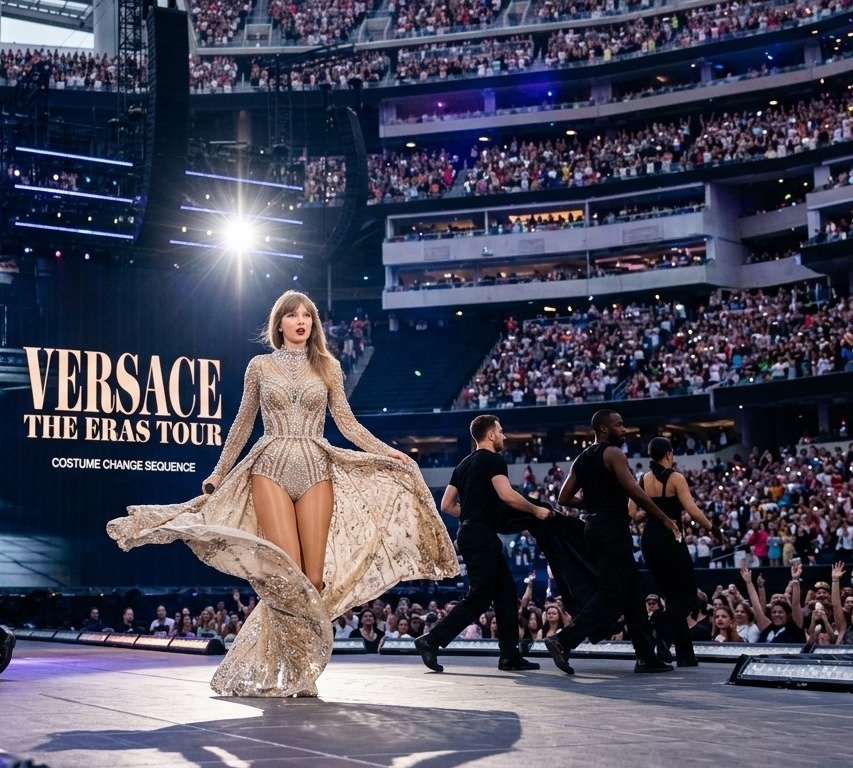
The Eras Tour is not just a concert; it is a “Sovereign Economic Event.” Financial analysts at Billboard and major banks have coined the term “Taylornomics” to describe her impact.
- Eras Tour Outfits: Every outfit change is a strategic brand partnership. By collaborating with Versace, Roberto Cavalli, and Christian Louboutin, she has turned her stage into a global runway.
- Economic Stimulus: According to the U.S. Travel Association, her tour has generated over $5 billion in total economic impact, boosting hotels, restaurants, and local businesses in every city she visits.
The “American Girl Doll” and Multi-Generational Licensing
There is significant “Search Intent” surrounding the Taylor Swift American Girl doll. While an official partnership hasn’t been announced, the custom-made fan market is worth millions. This high demand illustrates her “Multi-Generational Appeal”—securing customers from Gen Alpha to Baby Boomers
Protecting the Empire: Trademarks and IP Control
Taylor Swift is famously protective of her Intellectual Property (IP). According to the World Intellectual Property Organization (WIPO), she has registered over 400 trademarks.
- She has trademarked lyrics (e.g., “This Sick Beat”), tour names, and even her cats’ names (Meredith, Olivia, and Benjamin Swift).
- Business Takeaway: Ownership is power. Her move to re-record her albums to own her “Masters” has redefined the music industry’s power structure.
The Business of “Easter Eggs”: Creating Engagement
Taylor Swift doesn’t just release products; she hides “hints” in her marketing. This keeps fans constantly engaged with her website and social media.
- High Retention: Fans spend hours analyzing her posts, which drives massive organic traffic to her store.
- Gamification: She has turned the act of “buying merchandise” into a game, which is a brilliant way to increase Customer Lifetime Value (CLV).
Fun Fact: The Retail Boom of Friendship Bracelets
During the Eras Tour, the “Friendship Bracelet” trend wasn’t just a hobby—it was a retail revolution. Specialty bead stores reported a 300% to 500% increase in sales globally. This shows how one artist’s brand can spark an entire micro-economy, creating wealth for thousands of small retailers.
Conclusion: The Future of the Swift Economy
Taylor Swift’s business ventures prove that you can be a creative visionary and a brilliant CEO at the same time. Her strategy—a blend of celebrity branding, strategic licensing, and total IP ownership—is the new gold standard for the modern entrepreneur.
As we move through 2026, the “Swift Model” of owning your work and diversifying your income streams is the best blueprint for success. Ready to start your own journey? Learn more about innovative Business Strategies at Globe Hustle.
Which Taylor Swift business move do you find most impressive? Let’s discuss in the comments! 🎤🔥