What is Perplexity SEO?
The shift from traditional search engines to conversational answer engines has transformed digital strategy. To capture high-value traffic in the United States and United Kingdom markets, brands can no longer rely solely on legacy optimization tactics. Modern visibility requires a deep understanding of Generative Engine Optimization (GEO) to ensure your digital assets are successfully processed, understood, and surfaced by Large Language Models (LLMs).
This Perplexity SEO Guide provides an advanced structural, technical, and semantic optimization framework designed to maximize your brand’s visibility within Perplexity AI’s conversational search results. By optimizing for its dual-crawler network (PerplexityBot and Perplexity-User), technical architectures can earn high-intent inline citations, dominate authoritative source cards, and secure direct user referrals across competitive B2B and enterprise landscapes.
Perplexity AI vs Traditional Google SEO
Understanding how generative engines evaluate data compared to traditional indexers is essential for maintaining organic search market share.
| Optimization Metric | Traditional Google SEO | Perplexity AI Optimization (GEO) |
|---|---|---|
| Primary Core Index | Googlebot & Google Index Matrix | Brave Search Index, Bing API & Real-Time Live Crawls |
| Primary Ranking Signal | Backlink Profile & PageRank Architecture | Semantic Concept Density & Entity Corroboration |
| Content Freshness Weight | Measured in Weeks/Months via Standard Recrawl | Measured in Hours/Days |
| Primary Structure Preference | Narrative Prose & Long-Form Content | Direct Q&A Blocks, Markdown & Structured Tables |
| Core Visibility Metric | Organic SERP Rankings | Inline Citations & Source Card Placement |
Technical Architecture: Configuring for the Agentic Era
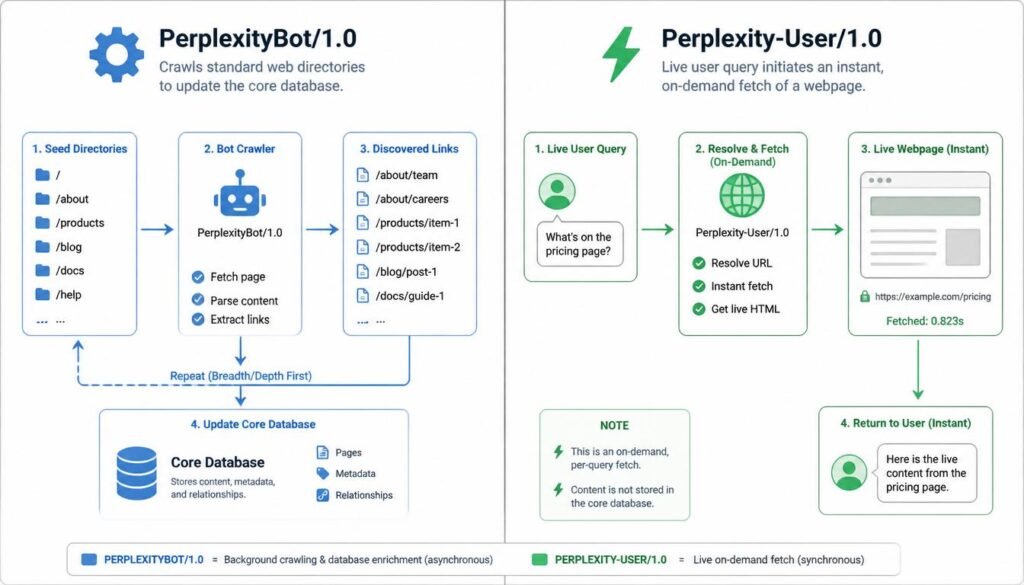
A flawless technical setup ensures your digital assets remain accessible to modern AI retrieval networks. Many websites accidentally block generative search agents through Web Application Firewalls (WAFs) or aggressive rate-limiting systems, causing visibility losses across platforms like Perplexity, ChatGPT, and Gemini.
The Dual-Agent Blueprint
Perplexity deploys two separate user agents:
PerplexityBot/1.0
The automated crawler responsible for building and refreshing Perplexity’s index. Blocking this bot reduces your chances of earning citations.
Perplexity-User/1.0
A real-time fetcher activated by user searches. It retrieves fresh content on demand and functions more like a browser than a traditional crawler.
Recommended Robots.txt Configuration
User-agent: PerplexityBot
Allow: /
Disallow: /private-api/

User-agent: Perplexity-User
Allow: /
Firewall Whitelisting Protocol
If you use Cloudflare WAF or AWS WAF, ensure legitimate Perplexity traffic is not blocked by automated security rules. Validate user agents against official Perplexity IP ranges and allow trusted requests while maintaining security controls.
Content Engineering: Designing for RAG Extraction
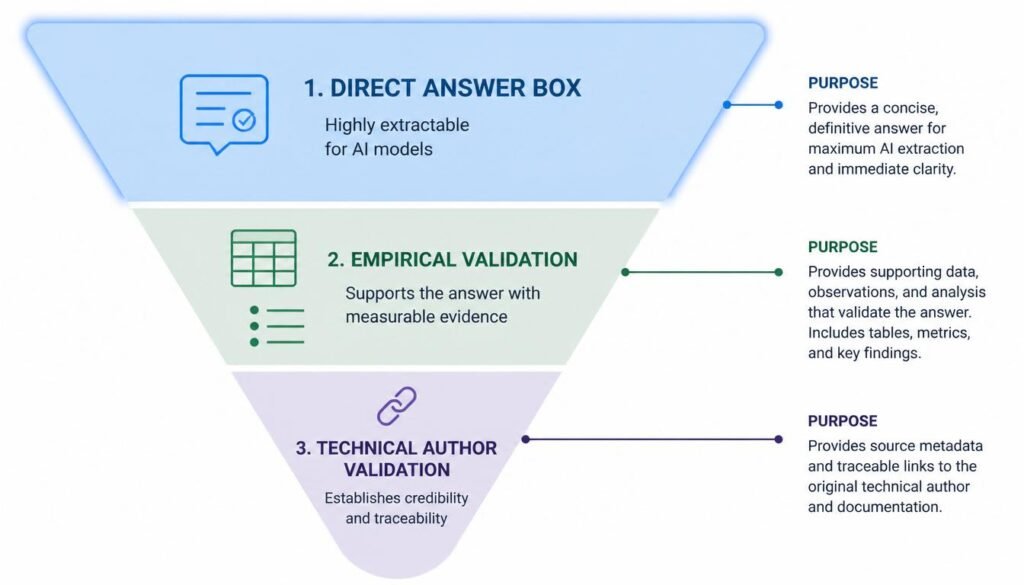
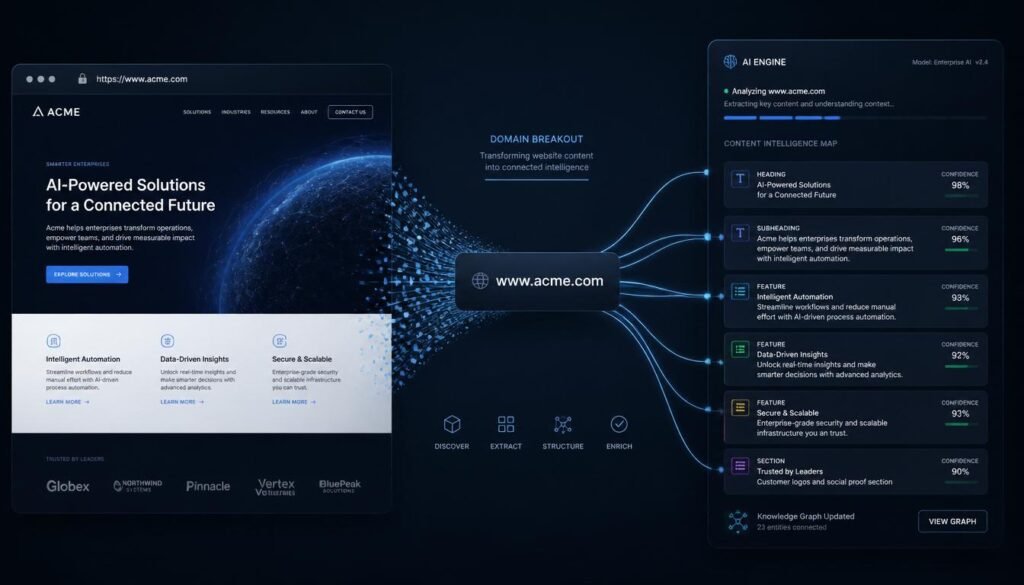
Retrieval-Augmented Generation (RAG) systems pull live web data to formulate conversational responses. To maximize extraction potential, structure content using formats that reduce processing friction.
1. The Inverted Pyramid Format
Every informational section should begin with a concise 40-60 word answer block directly beneath the heading. This helps AI systems quickly identify and extract the most relevant information.
2. Maximize Semantic Concept Density
Research consistently shows that highly cited content contains more interconnected concepts and clearer entity relationships.
Instead of:
“Our strategy drives amazing traffic growth.”
Write:
“Our Generative Engine Optimization framework increased organic traffic by 42% and generated 1,200 AI citations within 90 days.”
3. Use Wikipedia-Style Organization
AI systems heavily favor structured information.
Best practices include:
- Clear H2 and H3 hierarchies
- Numbered procedures
- Bullet-point summaries
- Markdown tables for comparisons
- Entity-focused explanations
Semantic SEO and Entity Mapping
Modern AI search systems rely heavily on entity relationships rather than simple keyword matching.
Perplexity and similar platforms build knowledge graphs connecting:
- Brands
- People
- Organizations
- Locations
- Products
- Technologies
The stronger and clearer these relationships become, the easier it is for AI systems to understand and trust your content.
Nested JSON-LD Schema Architecture
Structured data acts as a direct communication channel between your website and AI systems.
Example implementation:
{
  "@context": "https://schema.org",
  "@graph": [
    {
      "@type": "Organization",
      "@id": "https://globehustle.co.uk/#organization",
      "name": "Globe Hustle",
      "url": "https://globehustle.co.uk/"
    },
    {
      "@type": "TechnicalArticle",
      "@id": "https://globehustle.co.uk/perplexity-seo-guide/#article",
      "headline": "Perplexity SEO Guide: The Enterprise Blueprint for Earning AI Citations",
      "author": {
        "@type": "Person",
        "name": "Asmara Khan"
      }
    }
  ]
}
The 60-Day Freshness Loop
Generative search engines strongly prioritize recent information.
To maintain visibility:
- Review important articles every 60 days.
- Update statistics and examples.
- Refresh temporal references.
- Update dateModified fields in schema markup.
- Add new industry developments when relevant.
Step-by-Step Execution Plan
1:Stage Crawlability Verification (Days 1-2)
- Analyze server logs.
- Verify PerplexityBot access.
- Verify Perplexity-User access.
- Confirm clean 200 OK responses.
- Update WAF allow rules.
2:Stage Content Restructuring (Days 3-5)
- Add answer boxes under headings.
- Convert dense paragraphs into lists.
- Introduce comparison tables.
- Improve semantic coverage.
3: Stage Schema Deployment (Days 6-7)
- Create nested JSON-LD structures.
- Connect entities using sameAs references.
- Validate schema implementation.
Stage 4: Ongoing Optimization
- Monitor referral traffic.
- Track citation frequency.
- Test target queries inside Perplexity.
- Identify content gaps.
- Refresh pages regularly.
Verifiable Authority and Industry References
Strong authority signals improve citation opportunities.
Best practices include:
- Referencing government resources.
- Citing university research.
- Linking to reputable industry reports.
- Supporting claims with verifiable data.
- Maintaining transparent sourcing standards.
Key Takeaways for Digital Leaders
A New Approach to Visibility
Generative visibility depends on semantic depth, structured content, and entity relationships rather than keyword repetition alone.
Welcome Legitimate AI Crawlers
Ensure PerplexityBot and Perplexity-User can access your content safely through properly configured robots.txt and firewall settings.
Prioritize Structured Formatting
Use answer blocks, markdown tables, and logical heading hierarchies to improve extractability.
Keep Information Fresh
Regular updates preserve citation visibility and maintain authority within AI search ecosystems.
Generative Optimization Evolution Matrix
Traditional Keywords (2010-2022)
SEO focused primarily on keywords, backlinks, and PageRank.
Early Generative Engines (2023-2024)
Conversational AI shifted attention toward answering user questions.
Advanced RAG Systems (2025)
Structured content became increasingly important for citation eligibility.
Agentic Architecture Integration (2026)
Optimization now requires balancing index crawlers with real-time retrieval systems.
Frequently Asked Questions
What is the official user-agent string for Perplexity?
Perplexity uses PerplexityBot for indexing and Perplexity-User for real-time content retrieval during user searches.
Does Perplexity respect robots.txt?
PerplexityBot follows robots.txt directives. Real-time retrieval behavior may differ depending on specific user requests and content accessibility.
How can I track Perplexity referral traffic?
Monitor analytics platforms, server logs, referral sources, and traffic patterns associated with Perplexity-generated visits.
Can businesses pay for citation priority?
No. Citations are determined algorithmically through relevance, authority, freshness, and content quality rather than paid placement.
Conclusion
Mastering Perplexity SEO is becoming essential for businesses seeking visibility within AI-powered search ecosystems. By combining technical accessibility, highly structured content, semantic entity optimization, and continuous freshness updates, brands can significantly increase their chances of earning valuable AI citations and referral traffic.
As generative search continues to evolve, organizations that adapt early will be best positioned to capture attention, authority, and long-term organic growth.
About the Author
Asmara Khan is a Global AI Content Editor, technical SEO strategist, and Generative Engine Optimization specialist. She helps brands improve visibility across modern AI-powered search platforms through structured content design, semantic SEO frameworks, and advanced technical optimization strategies.