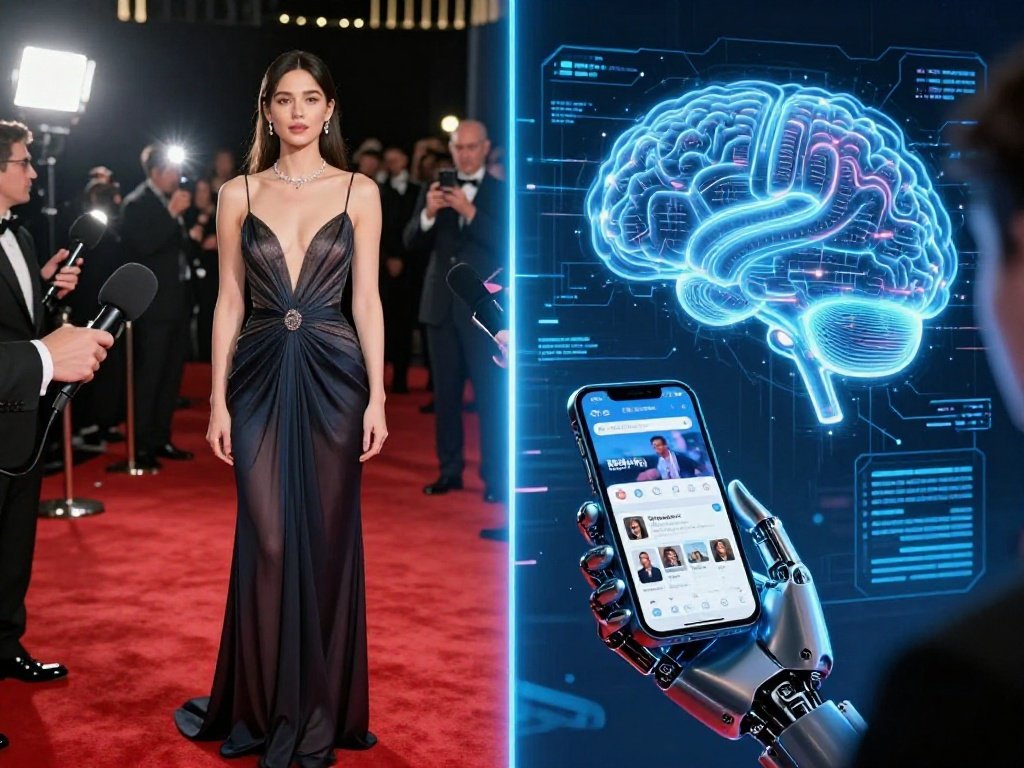
How do top celebrities use AI to run their business empire?
Celebrities in 2026 use AI tools to automate social media, clone their voices and likenesses for digital products, analyse fan behaviour, negotiate smarter brand deals, and generate passive income all without being physically present for every task.
In 2026, celebrities using AI to run business empires isn’t a future concept — it’s already happening at full speed. From voice cloning to automated brand deals, the world’s biggest stars have quietly handed their day-to-day operations to artificial intelligence. And the results are staggering.
In 2026, the biggest names in entertainment, music, and sports aren’t just celebrities anymore. They’ve become full-scale business empires and artificial intelligence is quietly running the engine room. From Taylor Swift’s data-driven touring machine to Jay-Z’s AI restaurant investment, the way famous people build and manage wealth has fundamentally changed.
This isn’t a trend. It’s a complete shift in how fame gets monetised.
What Is a Celebrity AI Business Empire?
A celebrity AI business empire refers to the ecosystem of AI-powered tools, systems, and strategies that public figures use to scale their personal brands, automate business operations, and generate multiple streams of revenue often with minimal hands-on involvement.
Think of it as the difference between a celebrity being their brand and a celebrity owning their brand. AI makes the latter possible at a scale that would have been unthinkable five years ago.
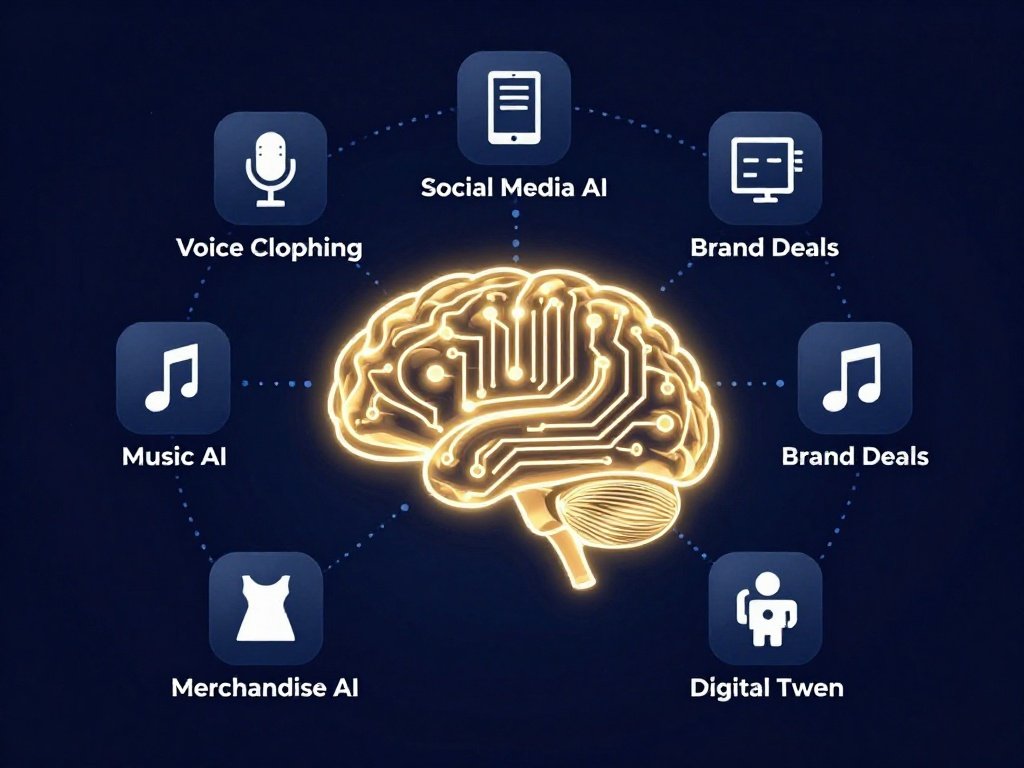
It covers everything: content creation, fan engagement, investment decisions, brand partnerships, merchandise, voice licensing, digital twins, and real-time audience analytics.
Why 2026 Is the Inflection Point
The stars aligned no pun intended around 2025 and 2026 for a few specific reasons.
Generative AI tools matured rapidly. Platforms like ElevenLabs, HeyGen, Runway ML, and Midjourney reached a quality threshold where celebrity-grade output became accessible. At the same time, platforms like YouTube, Instagram, and TikTok began officially supporting AI-generated content with proper monetisation frameworks.
More importantly, celebrities began structuring legal agreements around their AI likenesses. YouTube launched a system allowing celebrities to control and monetise how their likeness is used in AI-generated content. That changed everything. Suddenly, your voice, your face, and your style weren’t just assets. They were licensable IP.
How Celebrities Using AI to Run Business Are Dominating 2026
1. AI Voice Cloning and Licensing
Perhaps the boldest use of AI in celebrity business is voice cloning. Grimes became one of the first major artists to officially release her AI voice model through Elf.Tech, allowing fans and creators to generate music using her synthesised voice with a revenue-sharing agreement in place. She essentially turned her vocal identity into a passive income stream.
T-Pain followed a similar path, licensing his voice through YouTube’s Dream Track feature, which allows creators to overlay his AI-generated vocals onto their personal videos. The result? His voice generates income 24/7, without him recording a single new note.
This model is spreading fast. In the UK and US, entertainment lawyers are now routinely drafting “AI likeness clauses” into celebrity contracts — a space that barely existed in 2022.
What this means practically: A celebrity records their voice once. An AI model is trained on it. That model then generates revenue through licensing deals, creator platforms, and branded audio content indefinitely.
2. Digital Twins and Virtual Celebrity Experiences
Will.i.am has been one of the most vocal advocates for AI co-pilots in the creator economy. But the broader trend goes further: celebrities are now deploying digital twins AI versions of themselves capable of conducting interviews, hosting virtual events, and engaging fans in real time.
These aren’t cheap deepfakes. They’re sophisticated, trained models built on hours of footage, writing, and personality data. Companies like Synthesia and HeyGen are providing the infrastructure, while celebrities own the output.
For UK and US audiences paying premium fan subscriptions, the appeal is clear: personalised interaction with their favourite star, at scale. One pop star can have 10,000 “personal conversations” simultaneously through their AI twin something physically impossible before.
3. AI-Powered Social Media Automation
Managing a celebrity’s social media presence used to require a team of six to ten people working around the clock. In 2026, much of that work is handled by AI.
Tools like Lately.ai repurpose long-form interviews and press releases into platform-specific posts. Jasper handles caption writing and tone alignment. Canva Magic Studio generates on-brand visuals in seconds. And Brandwatch Consumer Intelligence tracks real-time fan sentiment, viral moments, and emerging trends — alerting the team before a story breaks.
The result is consistent, on-brand content publishing across Instagram, TikTok, X, and YouTube without the celebrity being involved in day-to-day decisions. Their AI stack handles the rhythm; they just step in for the moments that matter.
4. Data-Driven Brand Deals and Partnerships
Here’s where AI quietly makes celebrities significantly richer than they appear on the surface.
Historically, brand deals were negotiated on gut feel, fame metrics, and follower counts. In 2026, that’s changed. Celebrities and their management teams are using AI-powered analytics platforms to model the precise ROI of every brand partnership before agreeing to terms.
They can tell a brand: “Based on our audience’s purchasing behaviour, sentiment towards skincare, and engagement data from the last 90 days, a post from our client will generate approximately £X in attributed sales.” That data shifts the negotiation entirely.
Ryan Reynolds’ business strategy has been extensively studied for this reason. His production company, Maximum Effort, uses data and cultural analytics to time campaigns with almost surgical precision — the Aviation Gin sale to Diageo for $610 million being the most famous result. AI didn’t make that deal, but AI-style analytical thinking was at its core.
5. Celebrity AI Investment: Betting on the Technology Itself
Some celebrities aren’t just using AI — they’re owning it.
Jay-Z’s venture capital firm, Marcy Venture Partners, invested $16.5 million into Stellar Pizza, a robot-powered delivery service run by former SpaceX engineers that uses AI to operate fully automated pizza kitchens. That’s not a vanity project. That’s a calculated infrastructure bet.
Across Hollywood and the UK entertainment scene, celebrities are taking equity stakes in AI startups often in sectors that align with their existing brand: health tech, music AI, fashion AI, sports analytics, and content generation tools.
NBA legend Metta World Peace launched an AI-powered celebrity commerce platform in early 2026, designed to help public figures monetise their digital identity at scale. The platform links AI-generated content, merchandise, and fan interactions into a single revenue ecosystem.
6. AI for Music, Film, and Creative Production
The entertainment industry’s relationship with AI in 2026 is complex but commercially powerful.
On the music side, artists like MIDNATT (Lee Hyun) used AI voice technology from HYBE’s Supertone division to release the same song in multiple languages simultaneously reaching global audiences without recording in each language individually. For any artist with international ambitions, this is transformative.
In film and television, AI tools are being used for pre-production planning, script analysis, audience response modelling, and post-production editing. Celebrities with production companies are using AI to greenlight projects with higher confidence understanding likely viewership performance before committing to a budget.
7. Merchandise and E-commerce Automation
Kylie Jenner’s beauty empire didn’t scale purely on her Instagram following. It scaled on operational precision — and increasingly, that precision is AI-driven.
In 2026, top celebrity brands use AI to manage inventory prediction, personalise email marketing, optimise product launch timing, and even design product variations based on trend data. Platforms like Shopify now integrate directly with AI tools that can predict which product colourway will sell out first in the UK versus the US, and adjust marketing spend accordingly.
For a celebrity with a merchandise line, this isn’t just efficiency it’s millions of pounds in avoided dead stock and missed opportunities.
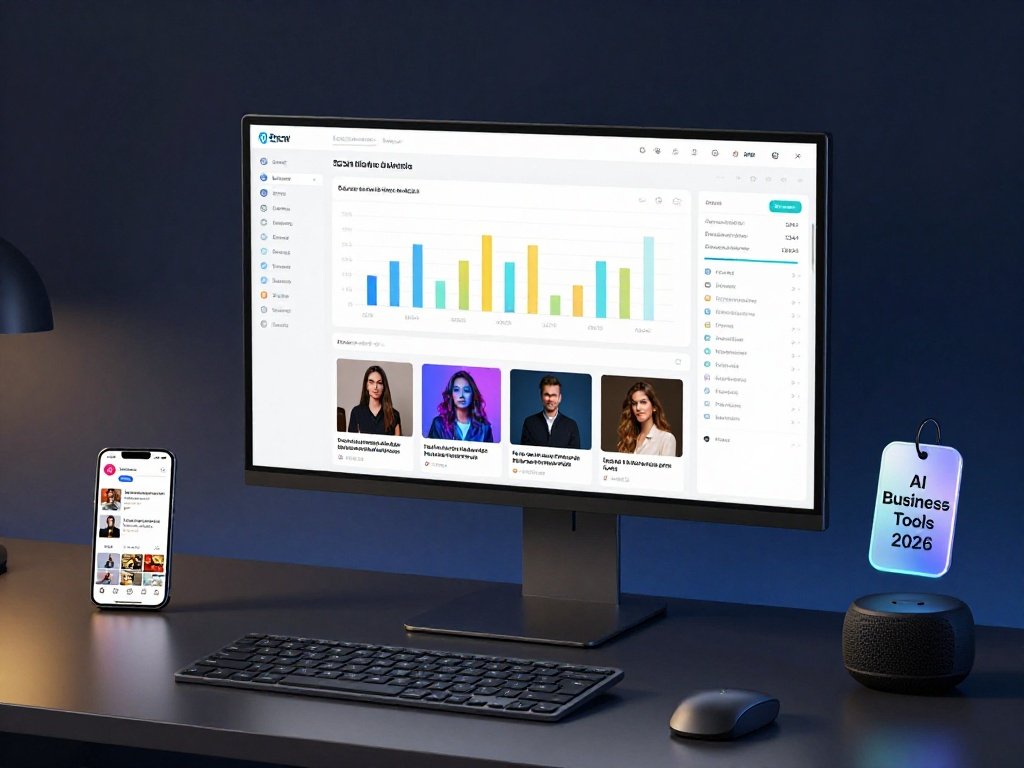
The AI Tools Behind the Celebrity Business Machine
| Tool | Primary Use | Celebrities / Brands Known to Use |
|---|---|---|
| ElevenLabs | AI voice cloning and licensing | Grimes, T-Pain |
| HeyGen | Digital twin video creation | Multiple entertainment brands |
| Runway ML | AI video editing and production | Hollywood production teams |
| Lately.ai | Social media content repurposing | Celebrity management teams |
| Jasper AI | Caption and copy writing | Brand marketing teams |
| Brandwatch | Fan sentiment and trend tracking | Major artist management |
| Canva Magic Studio | AI-powered visual creation | Influencer and celebrity teams |
| Synthesia | AI avatar creation | Corporate celebrity partnerships |
What Most Articles Get Wrong About Celebrity AI
There’s a persistent misconception that celebrity AI adoption is about replacing genuine human connection with fake versions. The reality is far more strategic.
The most sophisticated celebrity operations in 2026 use AI to amplify genuine moments not fabricate them. The actual interview, the real performance, the authentic personal post those remain human. AI handles the distribution, repurposing, analytics, and automation layer underneath.
Think of it like a luxury car. The engine is AI. The driver is still human. What’s changed is how far and how fast that driver can travel.
There’s also the question of risk. Deepfake scandals, voice cloning fraud, and AI-generated misinformation involving celebrity likenesses are real and growing problems. The celebrities navigating this most successfully are those who’ve built proactive legal frameworks around their AI use not just jumped on the technology for short-term gain.
How Small Creators Can Apply the Celebrity AI Blueprint
You don’t need a $10 million brand deal to benefit from what celebrities are doing with AI. The tools are largely the same. The principles are identical. What differs is scale.
Here’s a simplified version of the celebrity AI business framework applied to an independent creator:
- Define your AI-protectable assets — your voice, your style, your audience data
- Automate the repeatable — scheduling, repurposing, email sequences, analytics
- Use AI for research, not replacement — understand your audience better than your competitors do
- Build systems before you scale — AI amplifies what exists, so build quality first
- Own your data — first-party audience data is the foundation of any AI-powered brand strategy
Creators building their presence in the UK or the US will find GlobeHustle genuinely useful. Specifically, it covers the practical intersections of creator economy strategy, AI tools, and digital business in real depth. Moreover, if you are serious about building something lasting, it is well worth bookmarking as a regular resource.
The Legal and Ethical Landscape in 2026
No honest discussion of celebrity AI is complete without addressing the legal complexity.
Notably, the UK’s AI regulation framework and the US’s evolving state-by-state legislation are both actively grappling with the question of AI likeness rights. In practical terms, this means:
- Celebrities now routinely negotiate AI clauses in all talent contracts
- Platforms like YouTube have launched official AI likeness monetisation and protection systems
- Unauthorised deepfakes of celebrities are increasingly subject to civil and criminal liability
- Entertainment unions (SAG-AFTRA in the US) have negotiated protections around AI voice and likeness use
Celebrities who’ve engaged with this landscape proactively building their AI strategy within a legal framework — are positioned to generate substantial ongoing revenue. Those who haven’t may find their likeness being used without compensation.
The Bigger Picture: What Celebrity AI Tells Us About the Future of Business
Celebrities, whether we like it or not, are often early indicators of where business culture is heading. The tools they adopt tend to filter down to mainstream business practice within three to five years.
What the celebrity AI playbook tells us about 2026 and beyond:
- Passive income from intellectual property will become standard across many industries, not just entertainment
- AI-powered personalisation at scale will replace the idea of mass marketing entirely
- Digital identity protection will become as important as physical brand protection
- Data literacy will be a celebrity skill the stars who understand their own audience data will consistently outperform those who don’t
The business empire of the future isn’t built on fame alone. It’s built on systems, data, and well-deployed AI with fame as the initial catalyst.
FAQ: How Top Celebrities Use AI for Business
Q: Which celebrities are most known for using AI in their business empire?
A: Grimes (AI voice licensing), Jay-Z (AI company investments), Will.i.am (AI co-pilot advocacy), Ryan Reynolds (data-driven brand strategy), and Kylie Jenner (AI-powered e-commerce) are among the most documented examples in 2026.
Q: What is a celebrity digital twin?
A: A celebrity digital twin is an AI-generated version of a public figure trained on their voice, appearance, and personality data capable of interacting with fans, creating content, or participating in virtual experiences without the celebrity being physically present.
Q: Is celebrity AI voice cloning legal?
A: It depends on jurisdiction and consent. Clearly, when celebrities licence their own AI voice—such as Grimes through Elf.Techb it is entirely legal. However, unauthorised voice cloning without consent is increasingly subject to legal action in both the UK and US.
Q: Can small creators use the same AI tools as celebrities?
A: Yes. Tools like Lately.ai, Canva Magic Studio, ElevenLabs, Runway ML, and Brandwatch are accessible to independent creators. Any creator can apply the same strategies celebrities use — content automation, audience analytics, and AI-assisted brand deals regardless of their scale.
Q: How are celebrities protecting themselves from AI deepfakes?
A: Through a combination of platform-level protections (YouTube’s likeness control system), legal contracts with AI clauses, and proactive brand monitoring tools that detect unauthorised use of their likeness across the web.
Q: How much can a celebrity earn from AI voice licensing?
Q: What is GEO and why does it matter for celebrity content?
GEO (Generative Engine Optimisation) describes the practice of structuring content so that AI search engines can easily summarise and cite it — including ChatGPT, Gemini, and Perplexity. For celebrity brands publishing content, GEO ensures they appear in AI-generated answers: the new front page of the internet.
Conclusion
The celebrity AI business empire isn’t a future concept. In 2026, it’s already operating at full speed generating millions, protecting likenesses, automating entire brand operations, and reshaping what it means to be famous.
What makes this genuinely important isn’t the celebrity angle. It’s what these strategies reveal about the direction of all business. The fusion of AI automation, data intelligence, and intellectual property monetisation is the template for sustainable digital wealth in this decade.
To put it simply, whether you’re a pop star managing a billion-dollar brand or a creator building an audience from your bedroom in Birmingham or Boston, the principles are identical. To succeed, you need to own your data and automate the repeatable. In doing so, you can effectively use AI to amplify what makes you genuinely worth paying attention to.
Right now, AI is building empires that no longer need bricks. Algorithms, assets, and audience intelligence form their foundation — and they scale in ways physical businesses simply cannot match.
Recommended Guides for Creators
How to Build a Personal Brand with AI in 2026
https://globehustle.co.uk/how-to-get-first-freelance-client-with-ai/
Creator Economy Guide: Making Money Online in 2026
What Is GEO? Generative Engine Optimisation ExplainedAI Investment Guide for Beginners