

Choosing the best platform to sell digital products online is no longer just about picking a clean user interface. It is a critical mathematical and legal decision that directly impacts your bottom line, your customer retention, and your sanity when tax season arrives.
Choosing the best platform to sell digital products online is no longer just about picking a clean user interface. It is a critical mathematical and legal decision that directly impacts your bottom line, your customer retention, and your sanity when tax season arrives.
Whether you are launching a micro-SaaS tool, selling advanced Notion dashboards, or packaging downloadable PDF blueprints, this guide dismantles the top options available today. We look past marketing promises to analyze real transaction math, digital rights protection, and global distribution logistics.
Quick Answer: What is the Best Platform to Sell Digital Products in 2026?
Based on real volume testing, fee structures, and global tax handling, the choice depends on your specific product category:
- Best for Maximum Profit (Low Fees): Payhip is the overall best choice. It offers a “Free Forever” tier with a low 5% transaction fee and features an affordable $99 flat-rate capped plan that stops platform fees entirely as your sales scale.
- Best for Automated Tax Compliance: Lemon Squeezy is the premier choice for international sellers, SaaS products, and software developers because it acts as a full Merchant of Record (MoR), automatically managing global sales tax and EU VAT compliance.
- Best for Brand Ownership & Scale: Shopify combined with digital fulfillment apps remains the industry standard for established businesses requiring complete control over their checkout design and customer database.
The Core Infrastructure: Hosted Checkouts vs. All-in-One vs. Marketplaces
Before routing your hard-earned traffic to a payment gateway, it helps to identify the infrastructure style your product ecosystem requires:
- Hosted Checkouts & Merchants of Record (MoR): These tools serve as specialized checkout funnels. Platforms operating as a Merchant of Record contractually buy and resell the product to your customer, instantly assuming legal liability for calculating, collecting, and remitting global sales tax (like EU VAT and US state taxes).
- All-in-One Creator Suites: These ecosystems bundle your digital storefront with content delivery mechanics. They are tailor-made for membership tiers, multi-module video courses, and complex community memberships.
- Decentralized Platforms & E-commerce Engines: If you require comprehensive store customization, custom domain branding, deep database relationships, or an interconnected catalog of physical and digital inventory, fully independent platforms remain the standard.
- Open Marketplaces: These systems trade ownership of your customer relationship for immediate access to search traffic. They feature built-in discovery engines but impose restrictive listing terms and internal competition.
Direct Comparison: Top 2026 Digital Platforms at a Glance
The table below outlines how the leading solutions scale as your business grows, using actual platform metrics and real checkout expenses.
| Platform | Fixed Monthly Base | Flat Platform Transaction Fee | Best Suited Niche | Tax & VAT Posture |
|---|---|---|---|---|
| Payhip | $0 (Free Tier available) | 5% / 2% / 0% (Scales with monthly plan) | Ebooks, PDF manuals, design assets, templates | Tax calculation tools provided; Seller remains liable |
| Lemon Squeezy | $0 | 5% + $0.50 | Software, API tokens, SaaS subscriptions | Full Merchant of Record (MoR); Tax fully automated |
| Gumroad | $0 | 10% + $0.50 (Direct sales) | Creative assets, indie toolkits, brush packs | Full Merchant of Record (MoR); Tax fully automated |
| Shopify | $29 (Basic Tier) | 0% (Using Shopify Payments) | Large catalogs, mixed physical/digital inventory | Local tax configurations; Apps required for MoR |
| WooCommerce | $0 (Open-source software) | 0% (Standard processing apply) | Self-hosted WordPress developers | Manual system configuration; Plugin reliant |
| Etsy | $0 | 6.5% + $0.20 listing fee | Printables, journal inserts, digital patterns | Marketplace handles automated tax remittance |
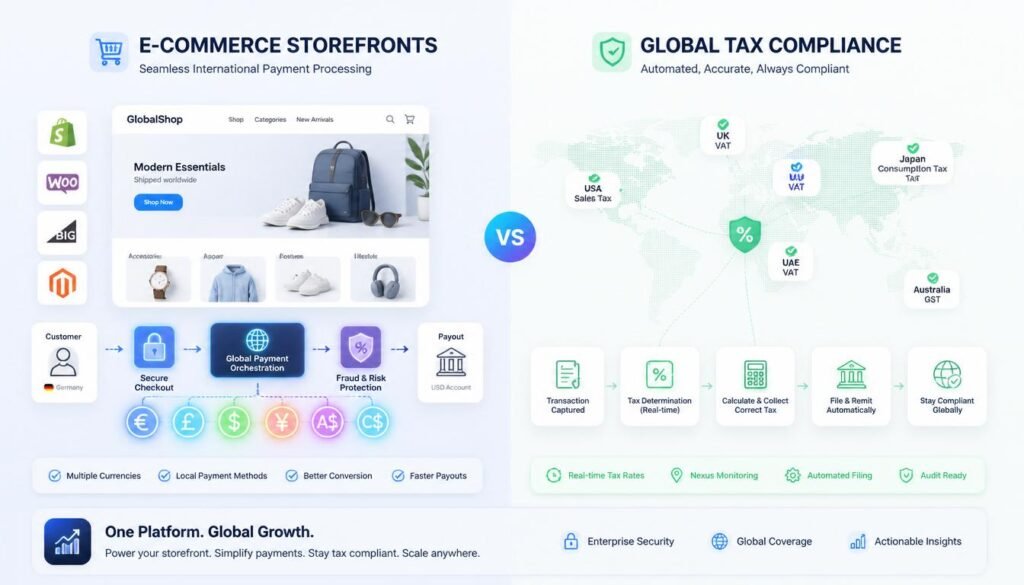
Detailed Evaluation of the Top Platforms
1. Payhip: The Most Cost-Effective Tiered Storefront
For independent sellers leveraging an existing audience on social media, newsletters, or search channels, Payhip presents a highly practical pricing model. Unlike alternative systems that lock features behind expensive premium walls, Payhip opens its entire tool suite including video course hosting, affiliate networks, cross-selling funnels, and membership layers to users on its free tier.
                  [Payhip Tier Selection Guide]

        Monthly Revenue           Recommended Plan
    ─────────────────────────    ──────────────────
         Under $967 / mo   ───►     Free Tier
                                  (5% Per Sale)
                                        │
       $967 - $3,500 / mo  ───►     Plus Tier
                                 ($29/mo + 2% Fee)
                                        │
         Over $3,500 / mo  ───►     Pro Tier
                                  ($99/mo + 0% Fee)
The system scales transparently through three distinct brackets. On the Free Forever plan, you keep your monthly overhead at zero while paying a 5% platform fee on transactions. Once your processing volume hits $967 per month, moving to the Plus plan ($29/month + 2% transaction fee) saves you money. When your business clears $3,500 per month, upgrading to the Pro plan ($99/month + 0% platform fee) caps your platform costs completely, leaving you with only standard payment processor fees (~2.9% + $0.30 via Stripe or PayPal).
The Operational Reality: Payhip excels at secure, straightforward file fulfillment. It features built-in PDF stamping to deter illegal file sharing, download link expiration rules, and automated license key generation for software assets. While it handles tax collection calculations seamlessly, it does not act as a full Merchant of Record, meaning your business remains the entity named on international tax invoices.
2. Lemon Squeezy: The Premium Choice for SaaS and Software
Specifically engineered for software developers, indie hackers, and advanced digital product creators, Lemon Squeezy has become a premier choice for launching digital files and subscription programs. Its primary value proposition centers around a complete Merchant of Record (MoR) architecture.
When an international customer buys your software or subscription, Lemon Squeezy legally processes the transaction, handles cross-border compliance, and automatically manages complex international tax codes like EU VAT.
Operating without fixed monthly subscription costs, Lemon Squeezy uses a flat transaction structure of 5% + $0.50 per sale. This percentage covers payment gateway processing, global tax compliance, fraud mitigation shields, and a secure infrastructure for issuing automated software licenses.
The Operational Reality: The user interface is refined, offering native support for usage-based subscription billing, discount code creation, responsive checkout overlays, and smart dunning management to automatically recover failed credit card payments. If your audience is global and you want to bypass the logistical headache of local tax registrations, the 5% margin is highly efficient.
3. Gumroad: Simple Setup with a Premium Platform Fee
Gumroad remains a well-known option for launching e-commerce files due to its absolute simplicity. It requires no design skills, features an integrated marketplace ecosystem (Gumroad Discover), and functions cleanly as a full Merchant of Record, removing international sales tax management from your to-do list.
However, its pricing structure requires careful calculation. Gumroad levies a flat 10% platform fee on every direct transaction, plus an additional $0.50 fixed charge. It is critical to recognize that this 10% rate does not cover underlying card processing fees (typically 2.9% + $0.30 via Stripe or up to 3.49% via PayPal).
Consequently, your real, effective transaction friction sits between 13% and 23% depending on your product’s retail price point. Furthermore, sales driven through the internal Discover marketplace carry an elevated 30% flat commission.
       [Gumroad $25 Product Real Fee Breakdown]

  ┌──────────────────────────────────────────────┐
  │  Customer Pays: $25.00                       │
  ├───────────────────┬──────────────────────────┤
  │ Platform Fee      │ $3.00  (10% + $0.50)     │
  ├───────────────────┼──────────────────────────┤
  │ Card Processing   │ $1.03  (2.9% + $0.30)    │
  ├───────────────────┴──────────────────────────┤
  │ Total Deductions: $4.03                      │
  │ Your Net Take-Home Profit: $20.97            │
  └──────────────────────────────────────────────┘
            Effective Fee Rate: 16.1%
The Operational Reality: For creators testing the waters or selling occasional low-cost items, the lack of fixed monthly fees is convenient. But as your business scales, the flat 10% model becomes costly. At $5,000 a month in revenue, you are paying around $500 in platform fees alone an amount that could easily fund a robust, independent e-commerce engine.
4. Shopify: The Gold Standard for Scaled Digital Brands
If you treat your digital products like a comprehensive retail operation, Shopify offers unparalleled power. By utilizing the Basic tier ($29/month) coupled with standard digital download apps (such as SendOwl, Sky Pilot, or Shopify’s native Digital Downloads extension), you can construct a highly polished, independent digital brand.
When you use Shopify Payments as your core gateway, the platform eliminates standard transaction fees, leaving you responsible only for standard credit card processing rates. This infrastructure supports custom domain mapping, deep email integration, and comprehensive customer database ownership.
The Operational Reality: Shopify does not natively function as a Merchant of Record. While it offers excellent tax calculation engines for US state lines, managing international compliance requires installing specialized applications like tax aggregation software. Shopify is best suited for established businesses that want full control over their brand identity and need to scale their marketing funnels without platform interference.
5. WooCommerce: Ultimate Open-Source Freedom
For creators who want total control over their underlying code, software dependencies, and data ownership, WooCommerce remains the gold standard. Running as an open-source plugin on a self-hosted WordPress site, WooCommerce costs nothing in licensing fees.
Your operational expenses are limited to your underlying web hosting provider and the processing costs of your connected payment gateways (such as Stripe or PayPal). There are no platform-enforced file limits, design boundaries, or volume caps.
The Operational Reality: This total freedom brings significant technical responsibility. You must manually configure file security protocols to protect your downloads, manage plugin updates, optimize checkout speeds, and handle your own sales tax configurations using global automated plugins. For technical teams, software developers, or WordPress experts, it offers an unrestrictive canvas; for non-technical beginners, the maintenance required can become overwhelming.
6. Etsy: The Instant Traffic Marketplace
Etsy approaches digital e-commerce from a marketplace perspective. It charges a modest $0.20 flat fee to list an item for four months, paired with a 6.5% transaction fee when a sale occurs.
The primary advantage here is immediate access to millions of active buyers looking for digital items like printable planners, design kits, resume templates, and wall art patterns.
                 [The Marketplace Trade-Off]

     Etsy Marketplace                Independent Store
 ┌───────────────────────┐       ┌───────────────────────┐
 │ • Built-In Traffic    │       │ • Zero Free Traffic   │
 │ • Low Initial Setup   │  VS   │ • Full Brand Control  │
 │ • High Competition    │       │ • Retain Email Lists  │
 │ • No Customer Lists   │       │ • Keep 95%+ of Profit │
 └───────────────────────┘       └───────────────────────┘
The Operational Reality: Etsy handles global sales tax calculations and automated distribution instantly. The major trade-off is structural control: you cannot collect customer email addresses directly for external email marketing campaigns, your store layout is restricted to Etsy’s standard template, and your listings appear directly alongside your competitors’ products. It works well as an initial testing ground or a secondary discovery funnel, but it is less effective as a standalone home for an enterprise brand.
Technical Features Deep Dive
Choosing a home for your products requires evaluating specific backend capabilities. The comparison matrix below outlines how these systems handle advanced fulfillment, asset protection, and backend automation.
| Platform | Built-In License Keys | PDF File Stamping | Max Individual File Limit | Subscriptions & Recurring Billing |
|---|---|---|---|---|
| Payhip | Yes | Yes (Native) | 5 GB | Yes (Native) |
| Lemon Squeezy | Yes (Advanced API) | No | 5 GB | Yes (Advanced Dunning) |
| Gumroad | Yes (Basic) | Yes (Native) | 16 GB | Yes (Basic) |
| Shopify | App Reliant | App Reliant | App Reliant (Varies by App) | App Reliant |
| WooCommerce | Plugin Reliant | Plugin Reliant | Unlimited (Server Dependent) | Plugin Reliant (Paid Extension) |
| Etsy | No | No | 20 MB per file | No |
Architectural Decision Matrix: Which One is Right for You?
To make an informed choice, map your business structure to the specific platform profile that supports it:Lemon Squeezy or Gumroad If:
- Your customer base is global, and you do not want to manage international sales tax or EU VAT compliance manually.
- You are selling developer utilities, API integrations, software keys, or simple creative brushes.
- You want a fast setup without configuring external servers or designing custom stores.
Choose Payhip If:
- You want to keep your monthly overhead low while retaining high profit margins on standalone files.
- You sell ebooks, templates, or courses and want native features like PDF watermarking and video hosting without paying steep monthly fees.
- Your predictable monthly volume makes a flat $99 capped plan highly cost-effective.
Shopify or WooCommerce If:
- You want complete ownership over your website code, branding identity, and email marketing funnels.
- You scale through paid ad funnels and need deep analytics integrations and custom landing pages.
- You manage a mixed product catalog containing both physical inventory and digital downloads.

Step-by-Step Implementation Blueprint
Once you select your platform, execute this deployment sequence to launch your store cleanly and protect your digital assets:
- Asset Preparation and Compression: Step 1.
Package your digital deliverables systematically. Combine multi-file bundles into structured.zipdirectories. For PDFs, run optimization scripts to balance image quality with fast loading speeds, and verify that your file names are clear and professional. - Fulfillment Gateway Configuration: Step 2.
Create your account on your chosen platform. If utilizing Payhip or Lemon Squeezy, connect your verified Stripe or PayPal accounts to enable payouts. If deploying a custom Shopify architecture, activate native processing engines and verify your regional tax profile. - Listing and Protection Protocol: Step 3.
Upload your master assets into the secure distribution vault. Fill out your product descriptions, configure clear preview images or video walkthroughs, and toggle security measures such as download link expiration limits, license keys, or PDF stamping. - Live Checkout Validation: Step 4.
Switch your store to test mode or use a 100% discount coupon to run a live transaction. Go through the entire checkout flow as a customer to ensure payment processing functions correctly, the thank-you redirect page loads instantly, and the automated download email arrives with the correct file attachments.
Frequently Asked Questions
Can I sell digital products online completely for free without any platform fees?
Yes, you can minimize fees by combining platforms like Ko-fi or a self-hosted WordPress + WooCommerce site using standard payment gateways. However, remember that payment processors (like Stripe or PayPal) will always deduct a standard transaction fee (~2.9% + $0.30) to route credit card payments safely to your bank account.
What is a Merchant of Record (MoR), and do I really need one?
A Merchant of Record is an authorized service provider that legally acts as the reseller of your digital goods, handling all backend financial liability, currency conversions, and global sales taxes (such as EU VAT). Utilizing an MoR platform like Lemon Squeezy or Gumroad is highly recommended if you sell to international buyers and want to avoid registering for local tax compliance across dozens of countries manually.
How do I protect my digital products from being leaked or illegally shared?
While it is nearly impossible to prevent piracy entirely, you can substantially deter file leaks by using secure platforms that offer native digital rights management (DRM). Look for features like individual download link expirations, strict IP address limits per download link, automated license validation keys for software, and dynamic PDF customer data stamping.
Is Shopify or WooCommerce too advanced for selling a single PDF ebook?
If you only have one or two simple files to sell, deploying a full e-commerce engine like Shopify or WooCommerce can introduce unnecessary monthly costs or technical setup hurdles. For single-item listings, streamlined hosted checkouts like Payhip offer a faster, more cost-effective alternative to launch and validate customer demand.
Final Verdict
The ideal environment for your store depends entirely on your product format and sales volume. If you are launching software or selling globally, Lemon Squeezy offers excellent peace of mind by completely handling automated international tax compliance. If you want maximum profit margins with zero fixed monthly overhead, Payhip’s scaling model provides an efficient runway for growing creators. Evaluate your transaction volume, pick your framework, and focus your energy on what matters most: building digital assets that solve real user problems.